


푸레그릇
페이지 정보

본문
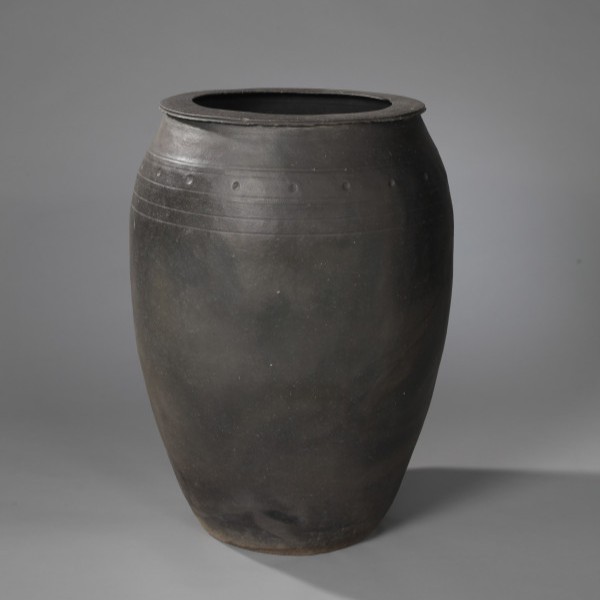
푸레그릇
푸레그릇은 검고 푸르스레한 도기를 말한다.
삼국시대에 나타나는 경질도기의 발전적인 형태로 볼 수 있으며, 질그릇 소성기법 중 하나인 꺼먹이 소성과 근대 시기에 유럽에서 전래된 소금유 기법이 결합하여 발달한 근대 옹기의 일종이다.
잿물을 바르지 않고 소성 중 800℃에서 900℃ 사이에 생소나무 가지를 넣어 가마 안에 산소를 차단한 뒤 소금을 뿌려 1,000~1,150℃ 사이의 높은 온도로 소성하면, 녹은 소금이 꺼먹(그으름)을 먹은 표면에 스며들면서 유약의 역할을 한다.
조선 후기부터 한국전쟁 전·후에 경기도 및 경기 이북 지역에서 활발하게 제작되었다. 주로 크기가 큰 보관용 항아리가 생산되었으며, 왕실과 양반가가 주 수요층을 이루었다.
푸레그릇은 질그릇 소성 과정에서 꺼먹이와 소금을 먹여 1,000~1,150℃ 사이에서 굽는 그릇이다. 질그릇보다 견고하고 오지그릇에 못지않은 통기성을 갖고 있으며 탄소 침착으로 방부성이 탁월하다.
제작된 푸레독은 장을 담거나, 곡식을 보관하는 용도로 사용되었다. 옹기의 역사로 보면 질그릇이나 오지그릇보다 늦게 제작, 사용되었지만, 거친 질감과 은은하게 반짝이는 검푸른 색감은 현대에 와서도 독특한 미감으로 평가받고 있다.
Pure geureut (Pure Pottery)
Pure geureut refers to dark, bluish-toned stoneware.
It can be understood as an advanced form of hard-fired pottery that emerged during the Three Kingdoms period,
and is a type of modern onggi that developed through the combination of the traditional kkeomeogi (smoke-blackening) firing technique and the salt-glazing method introduced from Europe in the modern era.
Unlike glazed wares, no ash glaze is applied beforehand.
During firing, fresh pine branches are introduced into the kiln at temperatures between 800°C and 900°C to reduce oxygen levels.
Salt is then scattered into the kiln, and the temperature is raised to between 1,000°C and 1,150°C. The melted salt permeates the soot-darkened surface, effectively forming a natural glaze.
From the late Joseon period through the years before and after the Korean War, this type of ware was actively produced in Gyeonggi Province and areas north of it.
Large storage jars were the primary form, with the royal court and the yangban aristocracy constituting the main consumers.
Pure geureut is produced by applying both smoke-blackening and salt during the firing process at temperatures between 1,000°C and 1,150°C. Compared to unglazed earthenware,
it is more durable and offers breathability comparable to glazed onggi, while carbon deposition provides excellent preservative properties.
The resulting jars were commonly used for fermenting sauces and storing grains.
Although it appeared later than both unglazed and glazed onggi in the historical timeline, its coarse texture and subtly lustrous dark blue hue are today appreciated for their distinctive aesthetic qualities.
- 이전글질그릇 26.03.19
댓글목록
등록된 댓글이 없습니다.